He Couldn’t Close His Eyes to Injustice: The Life and Legacy of Efraín Arévalo Ibarra
This is the story of Efraín Arévalo Ibarra: a teacher, father, and union member who was “disappeared” by the Salvadoran government in November 1977. This story is told in collaboration between the University of Washington Center for Human Rights and the Arévalo Ibarra family.
Part 1: Who was Efraín?
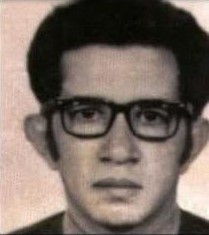
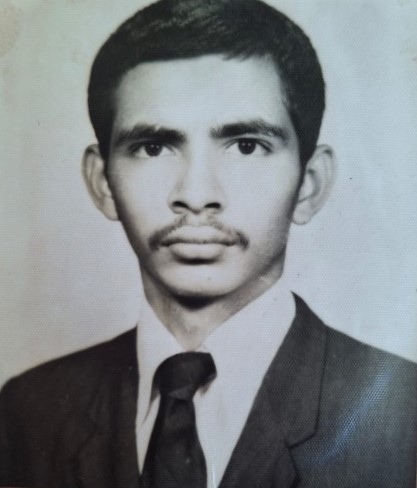
Efraín Arévalo Ibarra was a man from the countryside. He was born on November 19, 1934, in Santa Elena, in the department of Usulután, El Salvador. Efraín was the second of five kids in a family with limited means. He didn’t own a pair of shoes until he was 10 years old.
At the time, fourteen powerful families were said to control more than half of El Salvador’s land, growing coffee, sugar cane, and cotton for export; and creating working conditions that undermined labor and human rights, trapping families in cycles of poverty.
He was born into a tumultuous and tragic decade. In 1932, two years before his birth, an indigenous and peasant uprising was quelled by lethal repression in “La Matanza,” where more than 30,000 people were killed in a series of massacres by the Salvadoran military and government-aligned militias. Military rule facilitated the entrance of U.S. business and political interests into the country. The 1930s set the stage for the following half-century, years that would see Efraín and his peers build powerful social movements to demand a more equitable society.
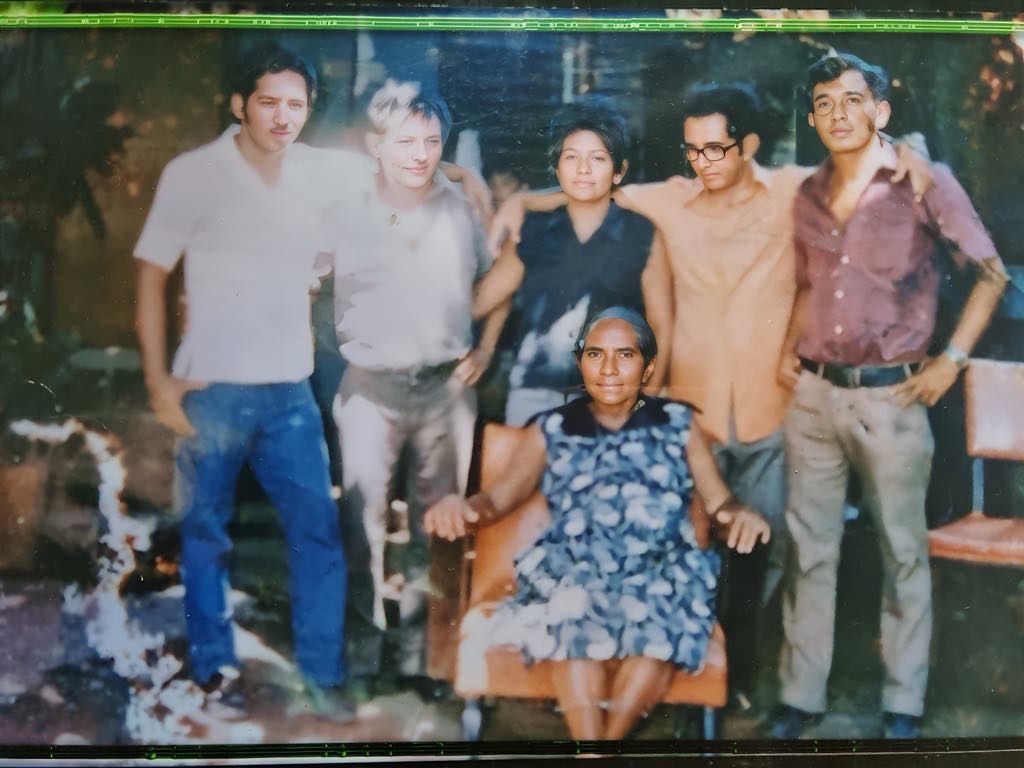
Rosa María Arévalo v. de Ibarra sits in front of her five children, from left to right: Esteban, Amilcar, Carmen, Efraín, and Astul. Photo credit/ Ibarra family.
Efraín’s father developed an illness very young. Efraín, alongside his siblings, had to start working at an early age. His older sister started a family and moved to the capital city, San Salvador. Efraín moved to the capital as well, staying with his sister, while he earned his teaching degree. After graduating, he moved to the city of San Miguel, the largest city in that province.
As a teacher, he was a natural. Efraín loved books, music, and art; he was always reading or listening to the radio, hungry for information that could help him understand the world. He loved to share ideas with others. Although he came to take on important positions—he became the principal of a school and a leader of the national teachers’ union ANDES 21 de Junio, he met with legislators and politicians—he stayed true to his humble roots.
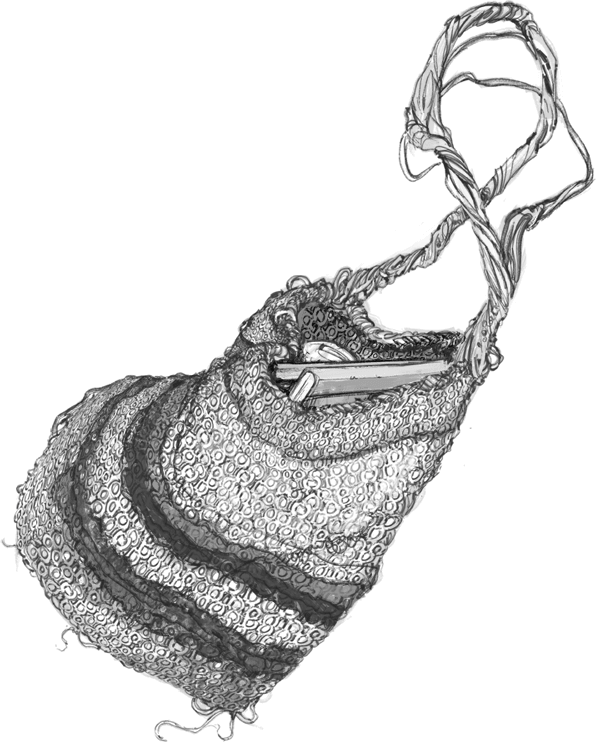
For example, he would head off to work in formal attire, but always carried a handmade sisal “matata” bag with him. And as his daughters remember, he would always stop along the way to chat with everyone who crossed his path. From fruit-sellers to factory workers, he always had time to ask about his neighbors’ families, and especially to learn about their struggles.
His wife, Iris Idalia, was also a teacher. Together they raised four children in San Miguel. Fresia, one of their daughters, remembers her parents:
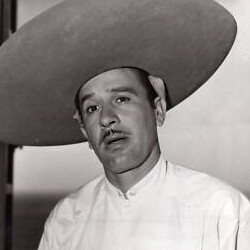
My dad, he was joyful. He had a broad smile and a booming voice. He loved to sing like Pedro Infante. Sometimes my mom would be walking by him and he’d reach out and grab her, pull her towards him, saying “¡Chata, venga!” and they’d dance.
He was the loud, friendly, extroverted half of the couple; my mom was more reserved.
I think she must have worried about what was going to happen.
Fresia
Fresia
As a teacher, Efraín cared deeply for his students. He spoke often of the injustice faced by those who weren’t able to go to school because they had to work in the harvests of cotton or coffee. He saw how far students had to travel to reach school, walking barefoot, and with no lunch. He would visit families in rural areas to encourage the parents and students, especially girls, to stay in school despite these hardships, because education was the key to a better future.
He was a demanding but generous parent. In addition to housework, he assigned his children their own homework, above and beyond what their teachers required of them. He would comment about art, film, and the news with his family, encouraging his kids to read and explore ideas. He was particularly interested in lessons about social injustices.
Growing up in that family, trips to the river to swim became chances to learn about plants and volcanic rocks. A promised ice-cream cone became a story about supporting street vendors rather than multinational chains. A trip to the municipal landfill offered a way to understand that others lived and worked there in extreme poverty.
Even the bedtime stories Efraín told his children were tales of injustices brought to light and the community power it took to reach towards collective wins.
His role as an educator expanded beyond job titles and fatherly duties.
After the war, when we went back to San Miguel for the first time, someone we’d never met approached us to tell us he was grateful because our dad had taught him and other workers at the beneficio de arroz [rice mill] how to read and write. On his way home from working at the school, he would stop at the beneficio to meet with the workers and teach them basics like this.
Pati
Pati
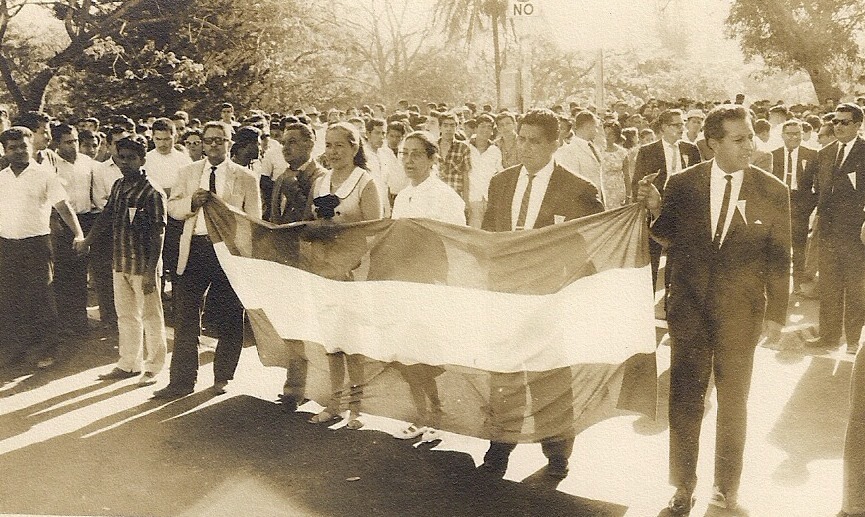
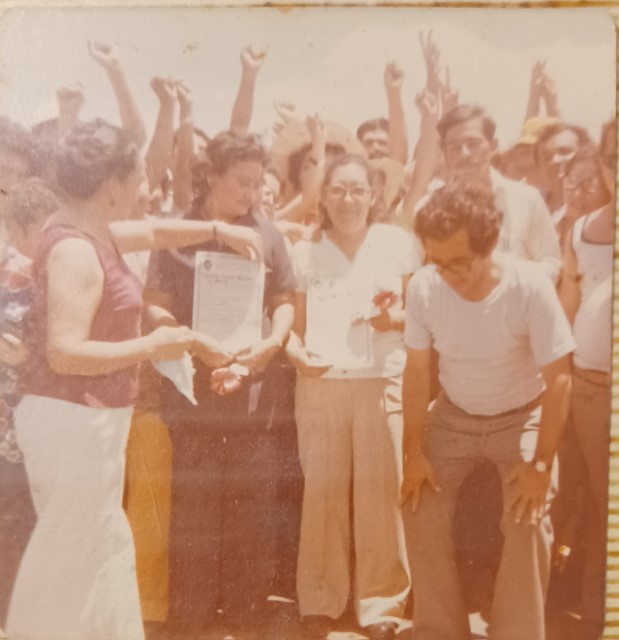
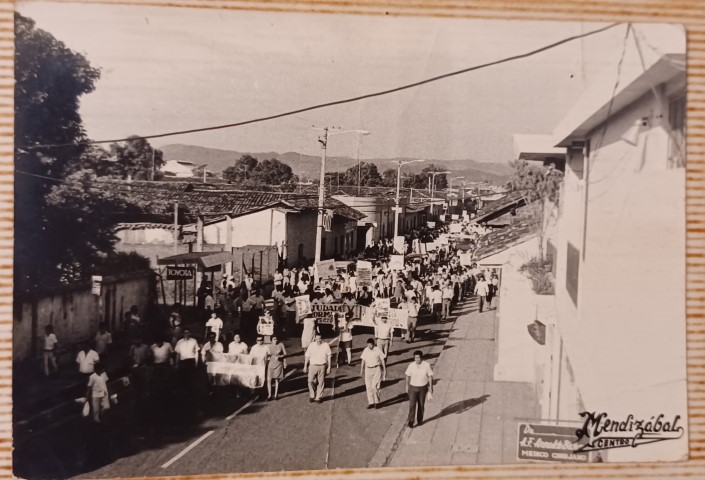
At that time, across El Salvador, teachers were organizing through their union, ANDES 21 de Junio, to demand changes—pensions for teachers, free education for students. Throughout the 1970s, in the heyday of El Salvador’s labor movement, Efraín and Iris joined teachers’ strikes, marches, and meetings, often with their kids in tow. These were the labor actions that helped secure the core benefits that Salvadoran teachers still rely on today.
Their house in San Miguel was a shelter for teachers needing temporary accommodation, always abuzz with visitors. Many came by to talk about mobilizing for change. Some spoke of the dangers involved.
I remember when the BPR was founded, there was an activity that went on all night and my dad took us all, the atmosphere was like a carnival, people were singing and celebrating. I remember the happiness on my dad’s face; at the same time, there was underlying fear that we could be attacked, we were just a few blocks away from the national police headquarters.
Fresia
Fresia
A demonstration from early on in the formation of ANDES 21 de Junio. Carrying the flag are: Juan Gonzales, Melida Anaya Montes, Isabel Gallegos de Pineda. (San Salvador 1967). Photo credit/ Chalo Montalvo.Efraín celebrates Teachers’ Day. Photo credit/Arévalo Ibarra family.Teachers’ march in San Miguel, 1970. Photo credit/ Arévalo Ibarra family.
Sketch of an old school notebook, pages flutter and highlight yellow as you scroll down the page.
Part 2: The Disappearance
“It was his greatest strength and also his worst weakness, because he couldn’t close his eyes to injustice.”
In the 1970s, Efraín rose through the ranks of the teachers’ union, and eventually became a member of the national executive council of ANDES 21 de Junio. He attended more meetings, he held more responsibility.
At the same time the family started to hear about more people they knew getting shot or killed. Teachers, workers, people that the Arévalo Ibarra family loved were starting to experience retaliation for speaking out. Matilde, another teacher the family knew, was detained and released; she later said that during her interrogation, they had asked about Efraín.
Tensions heightened.
Wakes were held for people who were tortured and killed.
It was a time of growing danger, but also deepening commitment, because people were tired of injustice, and believed things had to change. They were aware of the risks.
Iris and Efraín told their kids not to give out information about the family to strangers.
The sereno [watchman] of our neighborhood told us that the police kept coming around asking for my dad. He’d always make up some excuse, but it was getting harder and harder.
They’d asked what hours he kept, what he looked like. The same thing happened at the tienda across the street.
Pati
Pati
Eventually when we’d ride buses, he’d sit separately from us inside the bus, in case the bus got pulled over and he got pulled off, so they wouldn’t take us too.
Pati
En el fondo, él sabía. Deep down, he knew.
Fresia
Fresia
Timeline
October, 1977 Efraín's son, Pain, goes missing.
Efraín’s oldest son, also named Efraín, but nicknamed “Paín,” went missing.
Paín was a student activist and was arrested during a demonstration. No one knew where he’d been taken, but Efraín and Iris, like many other family members of the disappeared across El Salvador, searched for him everywhere, visiting police stations, hospitals, morgues. He didn’t turn up anywhere in San Miguel, so Efraín went to the capital to look for his son there.
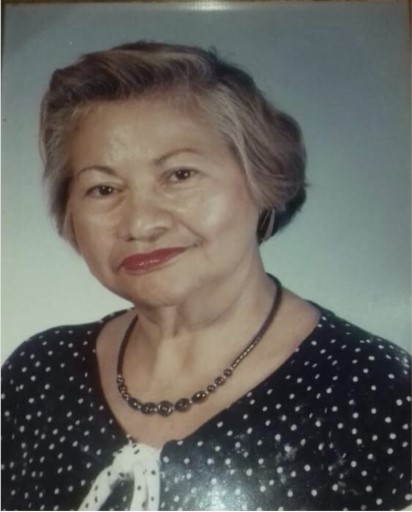
Iris Idalia Portillo Alfaro, Efraín’s wife. Photo credit/ Arévalo Ibarra family.Paín, son of Iris and Efraín. Photo credit/ Arévalo Ibarra family.
November 6, 1977 Efraín goes missing.
While searching for his son, Efraín stayed overnight at his brother Esteban’s house in San Salvador. The next morning, November 6, he left to meet with relatives, but never arrived.
It would be the last day a family member saw Efraín.
The following day, Monday, he was expected at an ANDES union meeting.
In San Miguel, the family only learned that something had happened when they received a telegram saying he’d never arrived at the ANDES meeting.
I remember the scene in the house when the telegram came: my older sister screaming, my grandmother crying, my mom’s face so pale. My little sister and I didn’t cry, we just watched.
Fresia
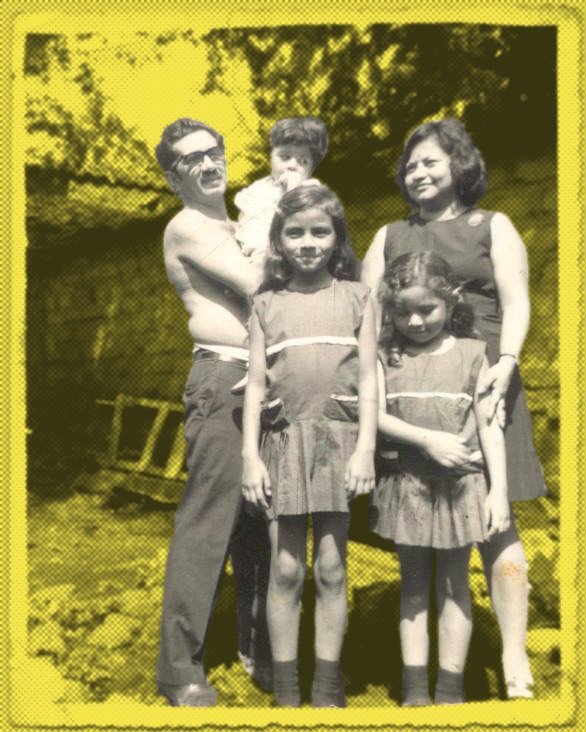
Efraín Arévalo Ibarra with his wife Iris and his daughters Zenia, Pati, and Fresia. Photo credit/ Arévalo Ibarra family.
A few days later, the family heard that troops from the National Guard had dumped Paín, nearly dead, at the Rosales Hospital, claiming they’d picked him up drunk. But in reality, he’d been held prisoner in their barracks and brutally tortured.
Efraín’s brother Esteban rescued him from the hospital and brought him back home to San Miguel. His sister remembers he was “puros huesitos,” just pure bones, with cigarette burns all over his body. He had been tortured so badly he couldn’t bathe or feed himself, but Iris bathed him, fed him, nursed him back to health. And as he recovered he thought of his father, still missing, imagining he too could have been taken by the National Guard.
Reflecting on the torture he had just endured, Paín warned his mother and siblings, “mi papá no va a soportar eso.”
Dad won’t be able to take it.
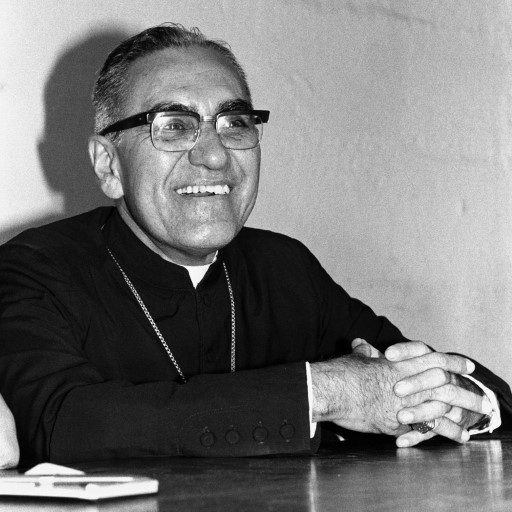
In his homily on Sunday November 27, 1977, Archbishop Óscar Romero—the much-beloved priest and advocate who became increasingly critical of state violence in the country—mentions Iris, the torture of her son Paín, and the disappearance of her husband, Efraín.
In the same homily, he announces the formation of COMADRES, a group of mothers and family members of disappeared and/or imprisoned political prisoners in El Salvador.
As her son healed, Iris began to search for her husband. She was tireless. She went everywhere: To court, to see if charges had been filed against him. To every jail and barracks. To every organization, in San Miguel, in San Salvador, all over the country.
Throughout 1978, ‘79, and ‘80, she, alongside Efraín’s mother Rosa, never stopped searching for him, speaking out about him, doing everything she could to find him or to recruit help from influential people who might be able to find him. She crisscrossed the entire country for this purpose. In San Salvador she went to COMADRES meetings. In Chalatenango she visited the mother of then President Carlos Humberto Romero.
One day, she went to meet with a woman who was a relative of Colonel José Eduardo Iraheta Castellon, then Vice Minister of Defense and Public Safety; Iris wanted to ask her if she could get her an appointment to talk with the Colonel, because it was possible he knew something about Efraín. Iris was often accompanied by one of her daughters on these visits, and would prep her before they went: if they say they can’t help us, I want you to speak up and say you need your father.
The woman denied their request to be connected with the Colonel. Iris’ daughter Zenia still remembers speaking up, as her mother had instructed her. After Zenia’s appeal, the woman agreed, and gave them a handwritten letter to take to see the Colonel.
Clutching that handwritten letter from the Colonel’s relative, they went to meet with Col. Iraheta at the Presidential Palace.
But it was to no avail.
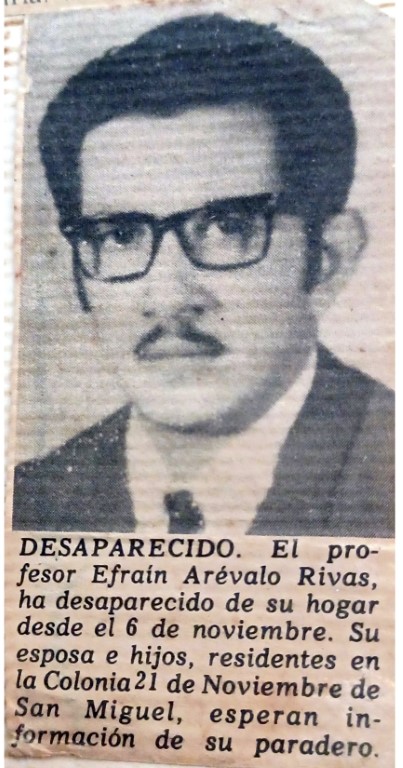
Iris took out an ad in the newspaper to search for her husband.
“MISSING. Professor Efraín Arévalo Rivas [Efraín’s second surname was listed incorrectly] has been missing from his home since November 6. His wife and children, residents of the Colonia 21 de Noviembre in San Miguel, are awaiting information on his whereabouts.”
The teachers’ union took out a similar ad, demanding the freedom of Efraín alongside fellow disappeared union member Manuel Alberto Rivera.
A scan of a newspaper clipping from the Tuesday, November 22, 1977 edition of La Prensa Grafica, showing an ad taken out by the ANDES 21 de Junio demanding the release of Efraín and fellow union members.
November, 1978 One year since Efraín’s disappearance.
On the year anniversary of Efraín’s disappearance, he was mentioned again in a homily by the Archbishop Óscar Romero. In his homily he calls for the release of all political prisoners, saying:
“In the country of Argentina there’s a very beautiful slogan: ‘Christmas without political prisoners!’ Two years ago today, on 26 November 1976, Lil Milagro Ramírez and Manuel Alberto Rivera Vázquez were captured by the National Guard. Today also marks the first anniversary of the disappearance of Professor Efraín Arévalo Ibarra and the laborer Alfredo Mendoza. We have also received news of assaults in Cinquera. For all these reasons, sisters and brothers, we raise a voice for freedom: ‘Christmas without political prisoners!’”
The search continued.
Iris contacted international organizations. Amnesty International mentioned Efraín in its calls to action.
But no one had answers.
Eventually, Iris herself started to receive threats. Danger seemed to be closing in. At the end of 1979, Iris moved her girls to San Salvador. Paín stayed behind in San Miguel, where he was a student at the university.
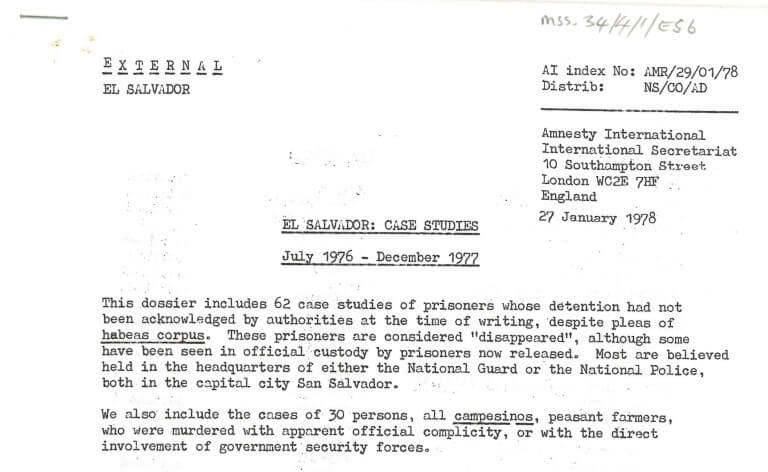
This 1978 Amnesty International dossier, shown below, publishes names of people detained and disappeared by the Salvadoran National Guard and National Police.
Among the names listed is Efraín’s.
The document shows the vast number of workers, students, teachers, and campesinos that were targeted by the Salvadoran government during this period.
Page 1: Scanned typewritten document from Amnesty International dated January 27, 1978 titled "El Salvador: Case Studies July 1976 - December 1977"Page 2: “Index of names” from the Amnesty International document showing Efraín’s name alongside many other names of disappeared people.
On Sunday November 26, 1978, in his homily, Archbishop Romero again references the Arévalo Ibarra family, noting the disappearance of Efraín Arévalo Ibarra.
“I urge all the noble forces in El Salvador to take action. What I ask is this: freedom for all those who are suffering unjustly. Either bring them before the courts to be judged, or let them go free! In El Salvador we want a Christmas without the torments and the tortures of the clandestine prisons.”
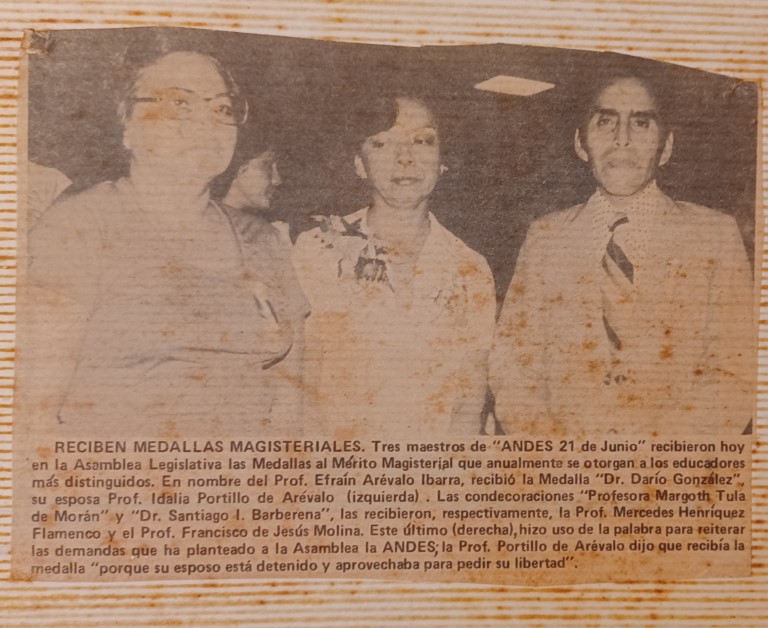
In 1978, while missing, Efraín won a teaching award.
As explained in the newspaper clipping above, Iris decided to accept the award on her husband’s behalf, using the event as a platform to demand his release and join those advocating for the rights of teachers.
The U.S. Embassy in San Salvador received inquiries on Efraín’s behalf.
Inquiries, like the one below, were met with no new information.
A telegram from the U.S. Embassy in San Salvador to Washington D.C. with the subject “ADOPTION BY AMNESTY INTERNATIONAL BY TWO EL SALVADORAN POLITICAL PRISONERS,” citing that the embassy has no information on Efraín Arévalo Ibarra other than what Amnesty International has put out.
Demonstrating just how dangerous things were for members of the teachers’ union at the time, this declassified 1979 telegram from the U.S. Embassy in San Salvador to the Secretary of State in Washington D.C., is titled “Wave of assassinations continues.”
The document summarizes the murders of members of the teachers’ union ANDES 21 de Junio, reporting up to twenty-four ANDES members killed in just four months.
Excerpt of declassified telegram with highlighted phrase "bringing total of Andes members killed from March-June 1979 up to twenty-four."
1980 Paín is detained and killed.
In March 1980, just months later after the rest of the family had moved to San Salvador, Paín was detained at a protest and killed.
Once again, Monsignor Romero mentioned the Arévalo Ibarra family, sharing the terrible news of Paín’s death in a homily—just one week before his own assassination while giving Mass on March 24, 1980.
Mon. Romero quotes Iris speaking of her son’s death in his March 16, 1980 homily. One week later Mon. Romero was killed.
“They found the body, showing signs of torture, of José Efraín Arévalo Cuéllar [also known as Paín], who had been arrested on March 9 in San Miguel. He was the son of the teacher Efraín Arévalo Ibarra, a political prisoner who disappeared two years ago. I have here a letter from his mother, the widow of Professor Ibarra, who is also well known. She tells me with great sadness that, just as she wept for her husband, now she is weeping also for her son. ‘At four forty-five in the afternoon of Saturday, March 9, he was arrested by the National Guard behind the church of El Calvario in San Miguel, and he was taken to the Guard’s base. He remained in their custody all the time until he appeared murdered on Wednesday the thirteenth. With the hope that you will make my sorrow your own, I send you my gratitude beforehand.’ Make her sorrow your own, sisters and brothers. It is the sorrow of all of us.”
For Iris and her three daughters, trying to rebuild a life in San Salvador was extremely difficult. The family moved many times, from rented apartment to rented apartment. The country had erupted in full-scale civil war and you could hear bombs, explosions in the city every night. Unidentified bodies would appear on the street, naked and decapitated.
I remember in San Salvador someone asked me ‘Are you related to Efraín Arévalo?’ And I’d say no. We didn’t use his last name. We weren’t ashamed of him, but we had to hide who we were.
Pati
There were always rumors. People would sometimes say ‘Efraín must have been involved with something,’ or that maybe he’d ran off with the guerrillas, or abandoned our family, or something. But mama always said that wasn’t true. She was sure that he never abandoned us. She was resolute. She never gave up.
Zenia
Times were terribly hard, but Iris was resilient. She got a job, figured out a way to get a loan to buy a house.
Time passed.
Children grew up.
Grandchildren were born.
For years the family continued to live under the terrors of war. At night, the sounds of shootings reverberated around the capital. Rumors flew of massacres throughout the country, though only the international newspapers covered those stories.
1992
The Chapultepec Peace Accords were signed on January 16, 1992, ending the twelve-year Salvadoran Civil War.
Iris still held out hope that Efraín might appear, or that news of his fate might be forthcoming. But the official silence continued.
I thought maybe they’d start to open up the jails and he’d be found. I don’t know whether I really believed it likely but I had some vague hope.
Zenia
To this day, there has been no judicial investigation into the fate of the thousands of people who, like Efraín Arévalo Ibarra, were forcibly disappeared during the conflict in El Salvador.
Part 3: If Documents Could Talk
In 2012, the Political Prisoners’ Committee of El Salvador (COPPES), a group of survivors of torture who had been imprisoned for their political activities during the war, asked researchers at the University of Washington Center for Human Rights to gather information from U.S. government archives about the abuses they endured, and for which they had never received justice. Since the United States provided weapons, training, and support, including over $5 billion dollars in aid, to the Salvadoran government’s counterinsurgency effort, detailed, daily records were kept—and shared—about developments in the war. Because the Salvadoran government has refused calls to open its archives to further the cause of justice or healing, U.S. government records from the Department of State, Department of Defense, and Central Intelligence Agency may be the next best thing.
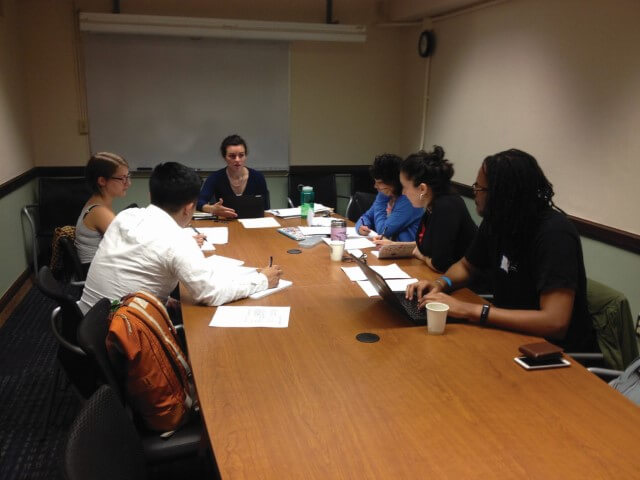
UWCHR undergraduate and graduate student researchers at a FOIA training learning how to request government documents related to the civil war in El Salvador.
Yet most of these documents remain secret, even today.
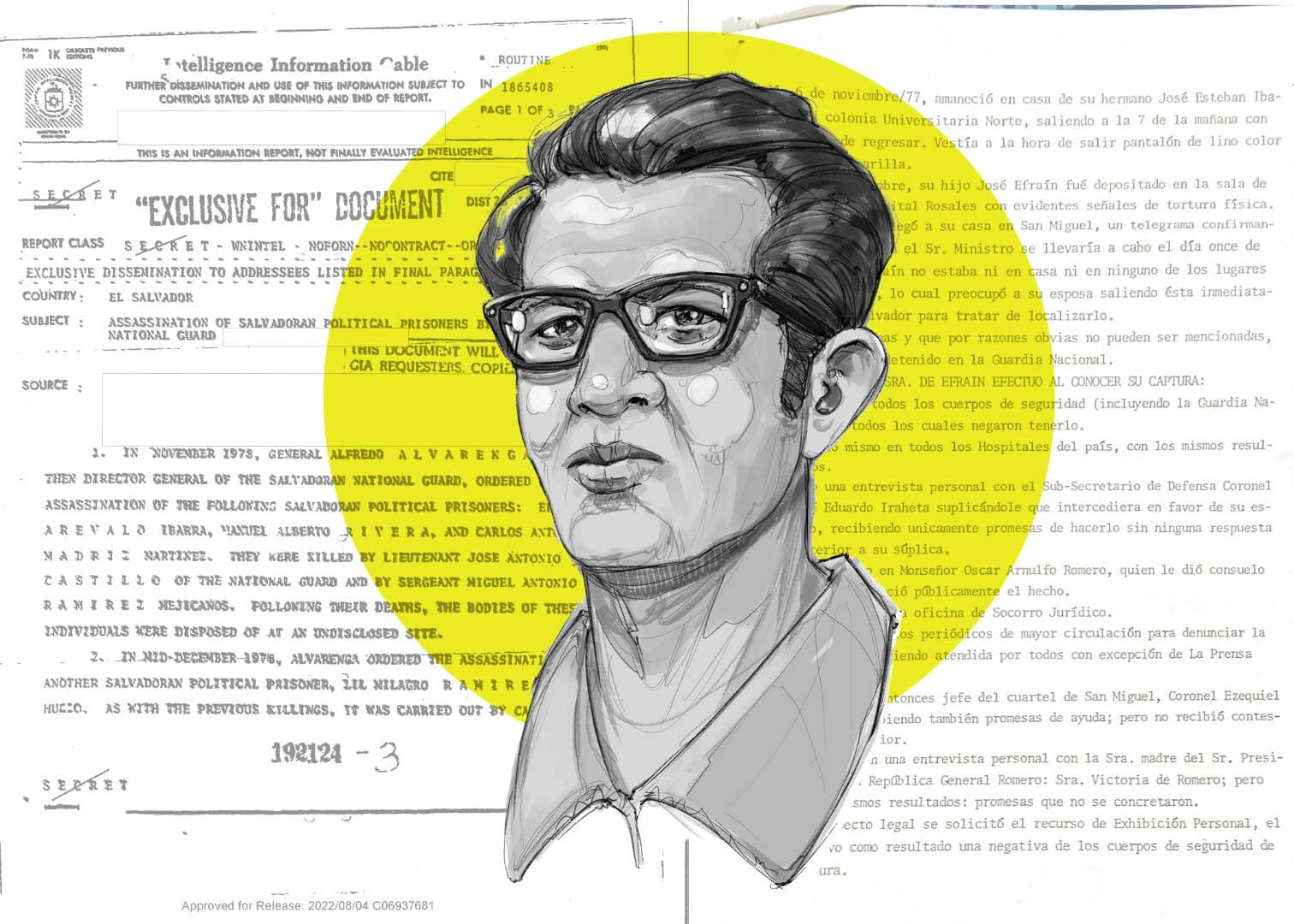
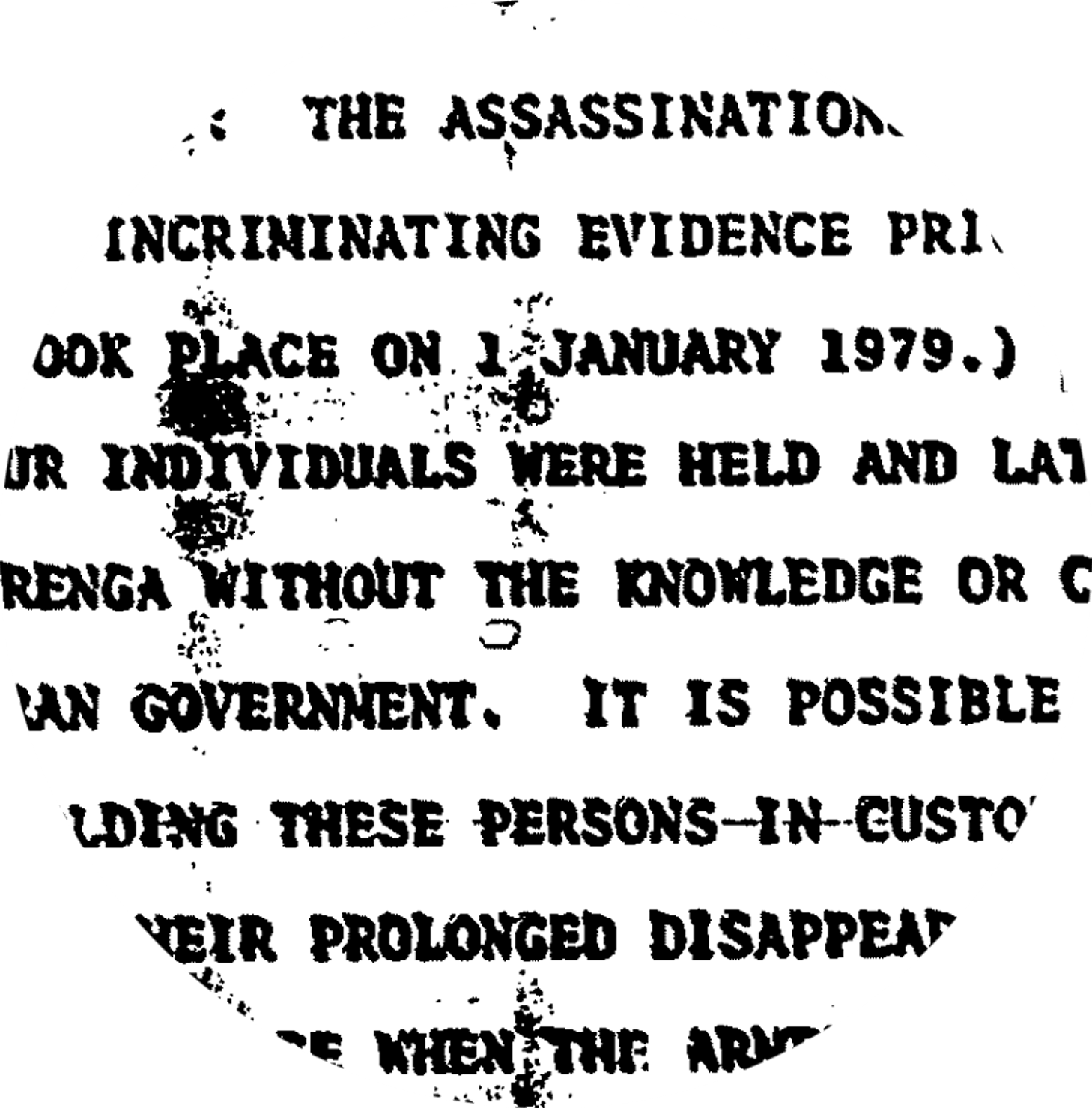
One day in 2022, UW researchers made a shocking discovery when, in response to a UWCHR public records request, the CIA declassified a document originally dated January 23, 1979. The document, shown below, describes the extrajudicial execution of Efraín Arévalo Ibarra and three other political prisoners.
This 1979 CIA document says that Efraín Arévalo Ibarra, as well as Manuel Alberto Rivera, Carlos Antonio Madriz Martinez, and Lil Milagro Ramírez Huezo were killed by Lt. José Antonio Castillo and Sgt. Miguel Antonio Ramírez Mejicanos, on orders from General Alfredo Alvarenga, the Director General of the Salvadoran National Guard.
It mentions Amnesty’s appeal on his behalf; “there has been high interest, both local and international, in the whereabouts of Arévalo,” the CIA wrote.
And yet for over four decades, the U.S. government kept secret the circumstances of his death.
All this time, this information was kept from his family.
Scan of a declassified CIA document, a cable dating January 1979, detailing people that General Alfredo Alvarenga ordered to be killed, including Efraín Arevalo Ibarra.State department cable including passage "There has been high interest - both local and international - in the whereabouts of Arevalo…"
When UW researchers received the document, they knew they had to share it with the families of those it mentioned. But they didn’t know how. They contacted CONABUSQUEDA, a Salvadoran government office for families of the disappeared, and CONABUSQUEDA called Efraín’s family.
Upon receiving this document, the family learned for the first time that Efraín was killed in the barracks of the National Guard, over a year after his initial detention.
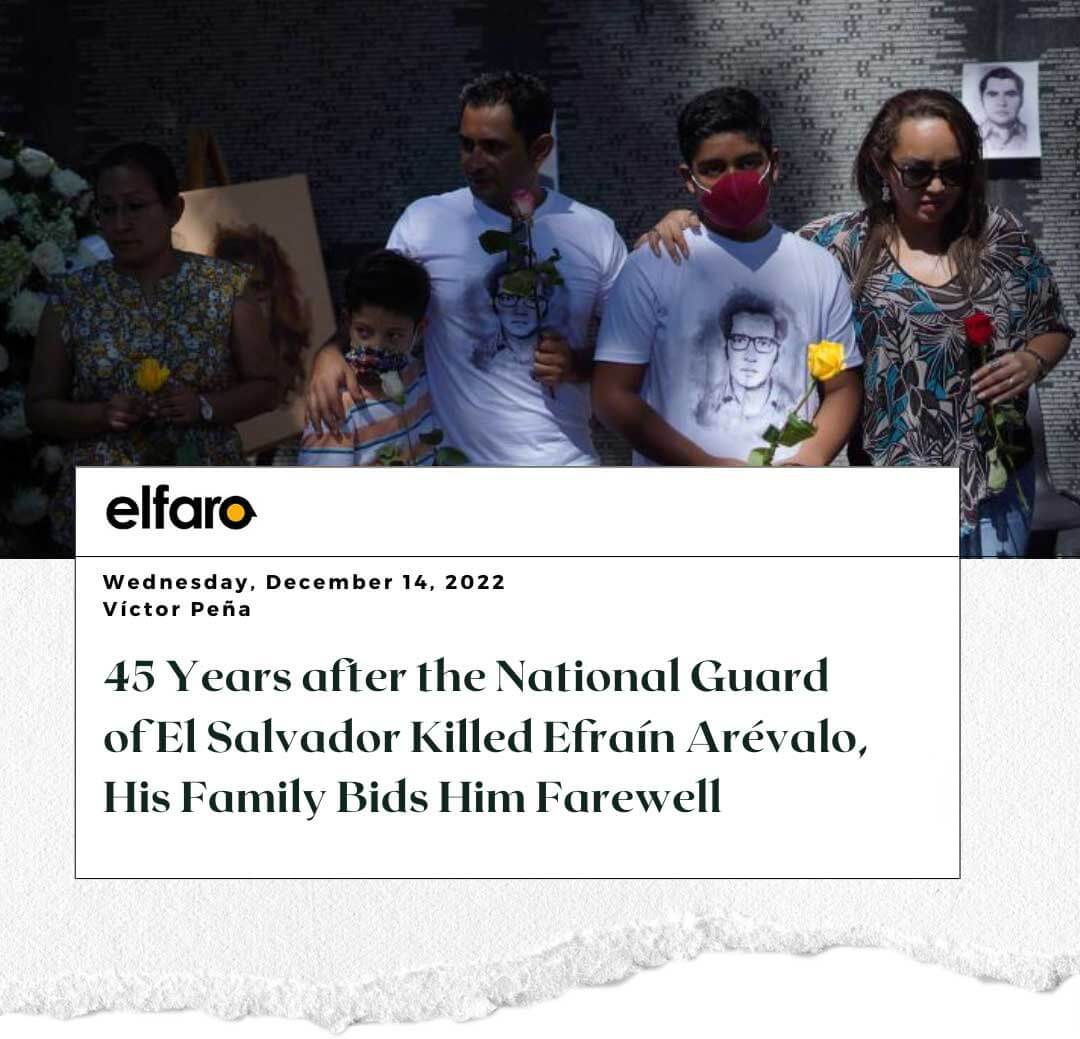
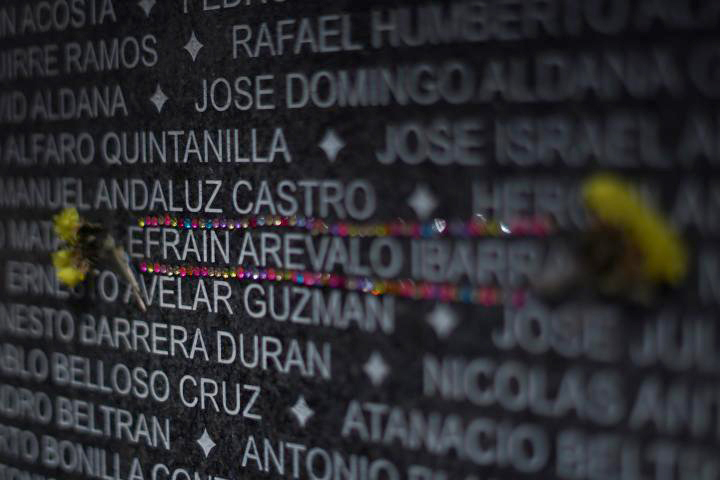
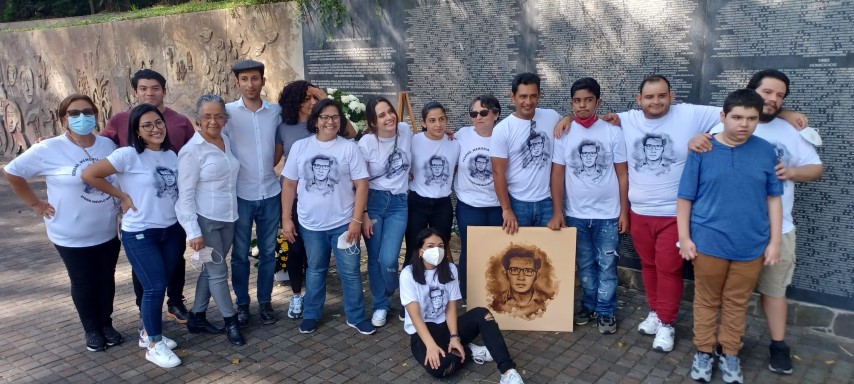
The news was shocking for Efraín’s family. Iris had died in 1995, but her children and grandchildren came together immediately to try to process the news of the newly-declassified CIA document. Among them was Renán, a son born to Efraín and another woman, whom his daughters had only met after the war. In those early, painful conversations after the discovery of the CIA document, they resolved to hold a memorial service to commemorate their father’s life. Because they still didn’t know where his body lay, they planned the service at the memorial wall in Parque Cuscatlán, built to give families like theirs a place to grieve.
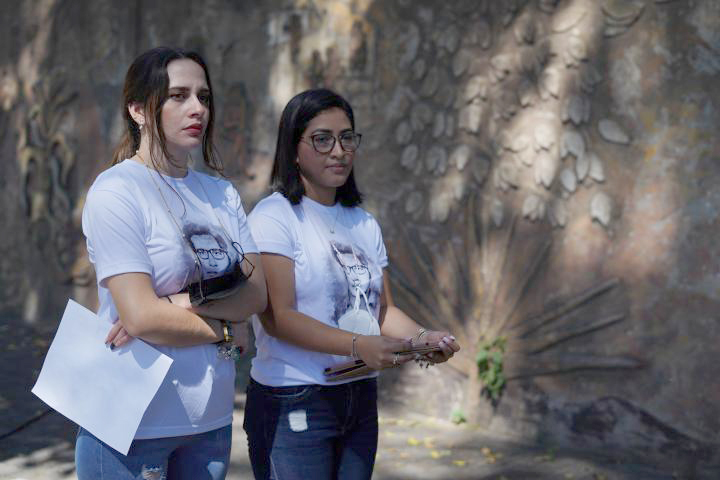
The service was led by Efraín’s grandchildren. In a photo essay in El Faro English covering the service, Efraín’s son-in-law Mario Orellana shared, “As long as Efraín is in our memory, he will always be part of history. We are doing this, as a family, to demand justice for all those crimes and human rights violations, so that they are not repeated here or anywhere else, because human rights must be respected.”
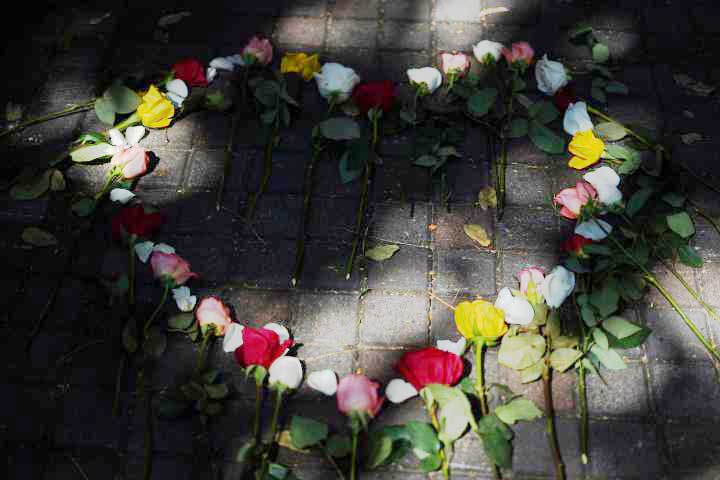
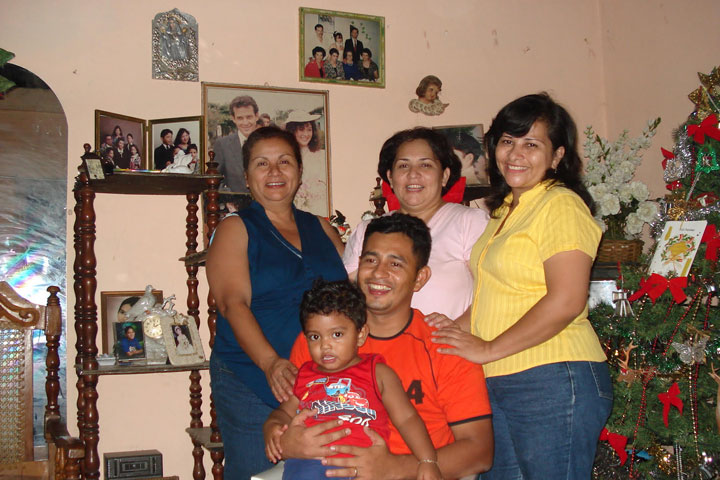
Roses placed at the foot of the Monument to Memory and Truth during Efraín’s ceremony. Photo credit/ El Faro.Grandchildren of Efraín deliver opening remarks during the ceremony remembering their grandfather. Photo credit/ El Faro.Efraín’s daughters and son, reunited in 2009. Photo credit/ Arévalo Ibarra family.Efraín’s name on the Monument to Memory and Truth in Cuscatlán. Photo credit/ El Faro.
One of his daughters, Zenia, described her experience:
I think that other than when my mother died, the greatest pain I’ve ever felt was when I read [in the CIA document] the names of my father’s killers, reading that he was held by the National Guard but they denied it to us, reading that he spent a year detained but ‘disappeared’ with at least three other political prisoners who are also named in the document, and that Amnesty International made this public because my mother, my grandmother, Tutela Legal, and Mon. Romero all denounced it.
…But [we organized and held the memorial service and] we were then finally able to say ‘Dear father, we weren’t mistaken, you spent a year suffering while we searched for you, while your wife and mother did everything they could, taking great risks in times of repression, Iris Idalia always knocking on doors. We, your children, grew up without you, without the caring and support of our father, with the anguish of not knowing where your remains lay, only with the memories and sometimes dreams that would come to us at night. It’s not easy, it is a tender wound that never healed. But your children and your grandchildren, all your descendants, today, we ratify that you were kidnapped, disappeared, stolen from us, but also that your sacrifice was not in vain; it was real. Today we can begin to heal, because today, Papá, we know that you are in that place where people go who fought for a better world, a place for good and noble souls: heaven.
Zenia
Zenia
When Efraín Arévalo Ibarra demanded education for the poor of his country, he knew the risks he was taking in speaking out. He was so committed to justice that he was willing to take those risks. At the end of the day, he was a victim of an unthinkable crime—forced disappearance—but his legacy is about more than his victimization. Efraín was a man who looked danger in the face and still proceeded with his commitments.
His legacy of courage and honor lives on.
Family members and descendants of Efraín Arévalo Ibarra gather at the memorial wall in Parque Cuscatlán for a ceremony honoring his life and legacy. Photo credit/ El Faro.